What Is the Maximum Safe Lifting Weight for One Worker in Manufacturing?
Learn the safe lifting weight limits for manufacturing workers and when lift assist equipment becomes necessary to prevent injuries and improve production efficiency.
Matt Seibert
3/4/20264 min read
The Quick Answer:
What Is a Safe Lifting Weight?
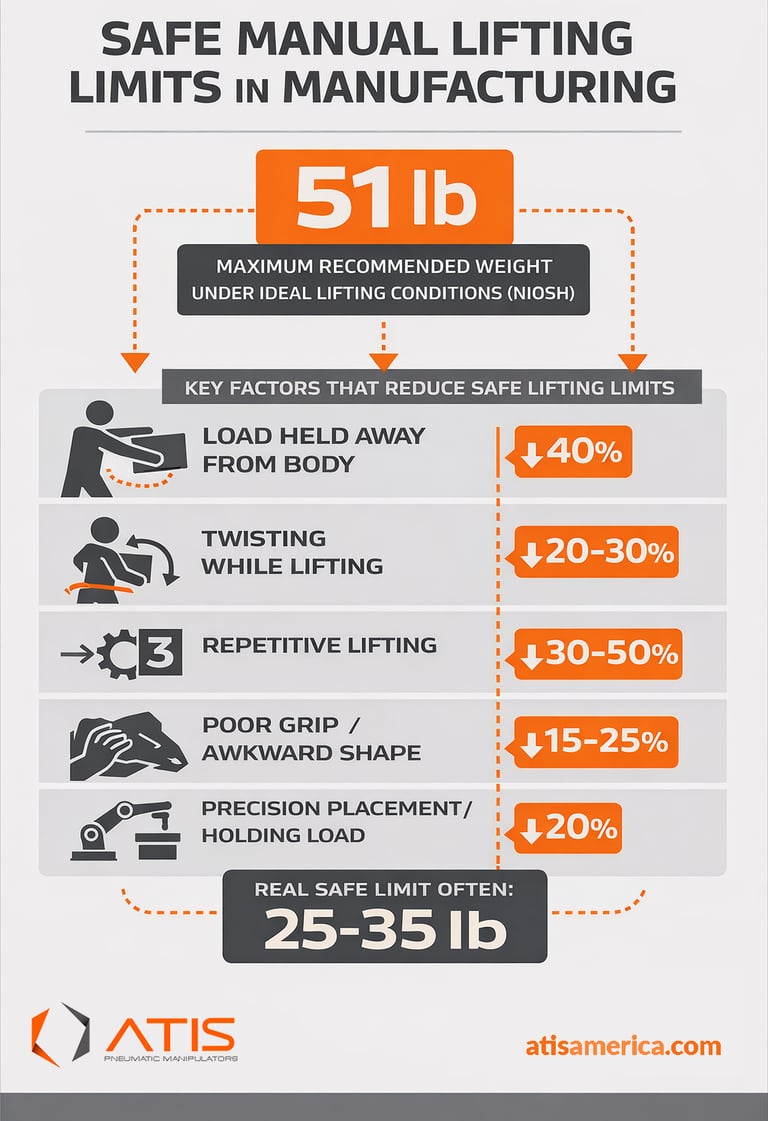
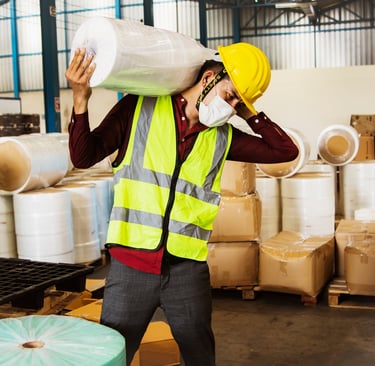
Most safety guidelines suggest that manual lifts should generally stay below 35–50 pounds depending on the conditions. However, that number assumes:
The object is easy to grip
The lift happens close to the body
The worker does not twist while lifting
The lift happens occasionally rather than repeatedly
The worker does not need to hold the load for extended periods
Once those conditions change, the safe lifting weight can drop dramatically.
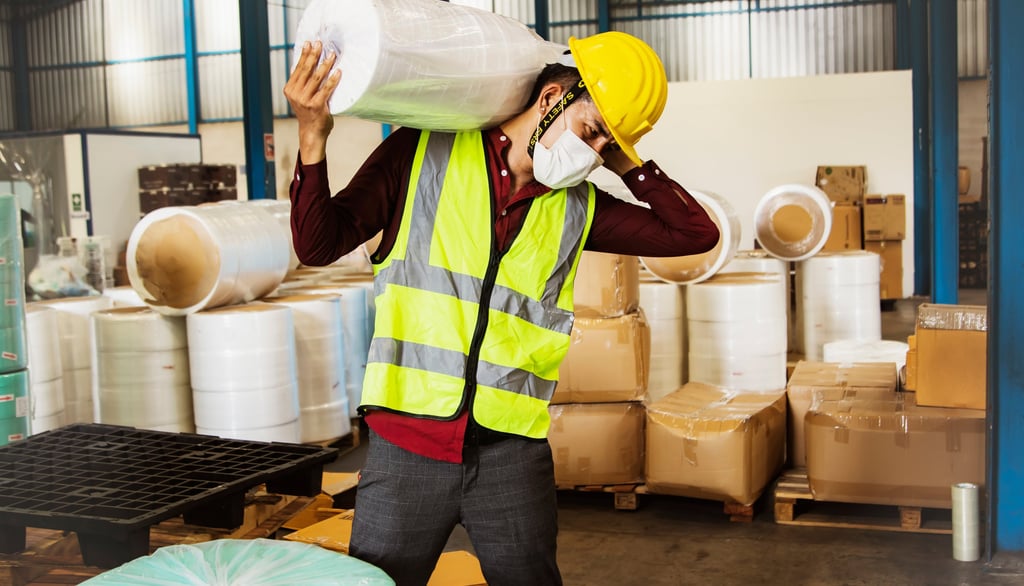
For example, if a worker must reach forward, rotate the load, or repeat the lift dozens of times per hour, even a 25–30 lb part can become a significant ergonomic risk. That’s why experienced floor managers know the real question isn’t just how heavy something is — it’s how it has to be handled.
Why Weight Alone Doesn’t Tell the Whole Story
A compact steel block weighing 40 pounds might be manageable for one person.
But a large panel or awkward assembly weighing 30 pounds can be far more difficult to handle safely. Several factors make lifting harder than the scale suggests:
Distance from the Body
The farther a load moves away from the operator’s torso, the more strain it places on the back and shoulders.
Awkward Shapes
Large panels, glass components, and fabricated assemblies force workers to grip in uncomfortable positions.
Repetitive Motion
Lifting the same part hundreds of times per shift compounds fatigue and increases injury risk.
Precision Placement
Many manufacturing tasks require parts to be held in place while being aligned, fastened, or installed, which adds additional strain.
Rotation and Orientation
Parts that must be turned or tilted during handling place additional stress on the wrists and shoulders.
If your team frequently deals with difficult positioning tasks, you might also find this helpful:
When Do Parts and Processes Call for a Pneumatic Manipulator?
The NIOSH Lifting Equation: Why Conditions Matter
To address the complexity of manual lifting, safety researchers developed the NIOSH Lifting Equation, which calculates recommended lifting limits based on real-world conditions.
The formula evaluates factors such as:
Horizontal reach distance
Vertical lifting height
Twisting or body rotation
Frequency of lifting
Quality of grip on the object
Under ideal conditions, the equation produces a recommended weight limit of about 51 pounds. But those ideal conditions rarely exist on a production floor. As soon as operators must reach forward, twist, lift repeatedly, or handle awkward components, the recommended safe lifting weight can drop significantly. This is one reason many manufacturers begin exploring ergonomic material handling systems when repetitive lifting becomes part of daily production.
For a deeper look at practical ergonomic improvements, see:
Pneumatic Manipulators Explained: How They Work and Why They Matter
Signs Your Production Floor Has Passed the Safe Lifting Threshold
Manual lifting problems often develop gradually. Over time, they become accepted as “just part of the job.” But certain patterns usually signal that lifting tasks have outgrown manual handling.
Two-Person Lifts Become Common
When parts routinely require two operators, production flow slows and coordination becomes a challenge.
Workers Struggle to Position Parts
Even when the weight is manageable, holding a part steady while aligning holes or components becomes physically demanding.
Forklifts Are Used for Small Tasks
When forklifts are repeatedly used for simple positioning work, it often means the shop lacks a better handling solution.
Operators Show Signs of Fatigue
Back, shoulder, and wrist fatigue are often early indicators that handling methods need improvement.
Precision Tasks Take Longer Than They Should
When workers must carefully muscle parts into position before fastening or machining, production efficiency suffers.
These challenges are especially common in environments handling glass panels, fabricated assemblies, or large machined components.
If your floor frequently deals with awkward parts, you may also want to read:
When Manual Handling Becomes a Bottleneck: Workflow Solutions
When Lift Assist Equipment Becomes the Practical Solution
At a certain point, improving lifting safety isn’t about asking workers to be more careful. It’s about giving them better tools for the job. Lift assist systems are commonly introduced when manufacturing tasks require operators to:
Handle large or awkward parts
Position components precisely
Hold parts steady during assembly
Perform repetitive lifting throughout a shift
Rotate or orient loads during installation
These systems allow one operator to guide and control the part while the equipment carries the load. Instead of fighting gravity, the worker focuses on alignment, placement, and process control. You can see a real-world example of this type of system in action here:
Real-world solutions from ATIS
Safer Lifting Supports Better Production
Manufacturing teams often approach lifting challenges from a safety perspective first. That’s important — but it’s only part of the picture.
When lifting tasks are properly supported:
Workers experience less fatigue
Precision placement becomes easier and faster
Two-person lifts can often be reduced to one operator
Production flow becomes more consistent
In other words, ergonomic improvements often lead directly to operational improvements.
If you're evaluating ways to improve material handling on your production floor, ATIS America works with manufacturers to help identify lifting challenges and practical solutions that improve both safety and productivity.
Send one of our engineers a message info@atisamerica.com
Frequently Asked Questions About Safe Lifting
What is the OSHA maximum lifting weight?
OSHA does not specify a universal maximum weight, but ergonomic guidelines often reference limits around 35–50 pounds depending on lifting conditions.
What is the NIOSH lifting limit?
Under ideal conditions, the NIOSH lifting equation suggests a maximum recommended weight of 51 pounds, though real-world conditions usually reduce this limit.
When should manufacturers use lift assist equipment?
Lift assist systems are commonly introduced when parts are large, awkward, repetitive to handle, or require precise positioning during assembly.

Walk through almost any shop floor and you’ll see it: someone muscling a part into position because “it’s not that heavy.” Sometimes it works. Sometimes it doesn’t.
The reality is that manual lifting in manufacturing is rarely about strength alone. It’s about body position, repetition, reach distance, and control. When those factors start stacking up, even moderate weights can quickly become unsafe.
Understanding the real limits of manual lifting helps manufacturers protect their people while keeping production moving efficiently.
If you're looking for ways to improve workplace ergonomics without immediately investing in large automation systems, you may also want to read:
Safer Handling Doesn’t Have to Start with Expensive Equipment