
Safer Handling Doesn't Have to Start with Expensive Equipment
Learn how floor managers can reduce injuries and improve material handling efficiency through operator training, standardized lift techniques, and smart process improvements—without investing in new equipment.
Grant Jedlinsky
1/28/20263 min read
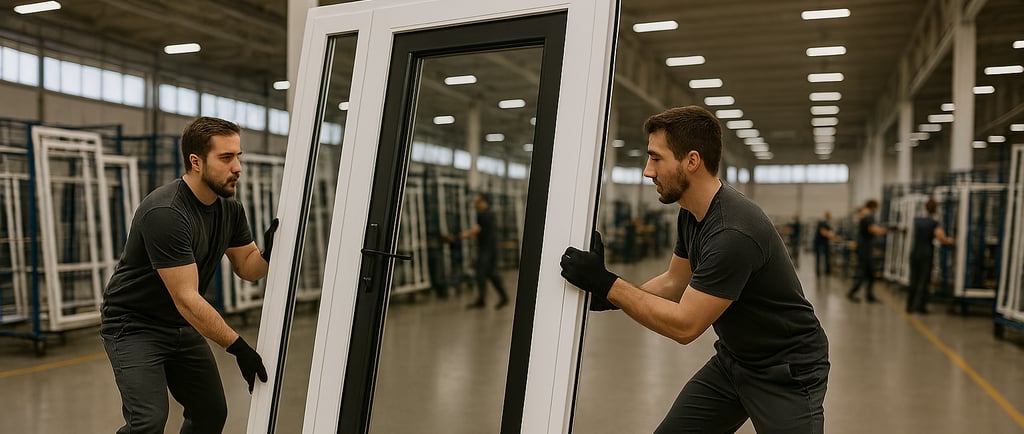
Preparing Operators for Safer Material Handling is the First Step
Most material-handling injuries don’t happen because people are careless. They happen because production pressure, awkward parts, and “the way we’ve always done it” quietly override good judgment.
Floor managers know this reality well. You’re trying to keep parts moving, hit takt time, and protect your team—often without budget approval for new equipment. The good news is this: meaningful gains in safety and efficiency can happen before a single dollar is spent on lift assisting equipment.
Smart training and process discipline can dramatically reduce strain, slowdowns, and injuries—especially in environments where heavy, awkward, or high-mix parts are moved manually.
The Real Problem Isn’t Strength — It’s Technique Under Pressure
Most operators are physically capable of lifting far more than they should be asked to. That’s exactly the problem.
In real production environments:
Panels are wide, flexible, or unbalanced
Grip points are inconsistent or poorly defined
Lifts happen repeatedly, not once or twice
Speed matters more than posture in the moment
When fatigue sets in or the line backs up, people default to whatever gets the part moved now. That’s when twisting, overreaching, and poor load control creep in. Training needs to acknowledge that reality—not ignore it.
Teach Load Control, Not Just “Lift With Your Legs”
Generic safety posters don’t change behavior. Practical, task-specific training does. If operators frequently lift large panels, castings, or assemblies, training should focus on:
Rotation techniques to avoid twisting under load
Sequenced lifts, where the load is repositioned in stages instead of one continuous motion
Defined grip zones that keep hands and wrists neutral
Body alignment that keeps shoulders square to the load
The goal isn’t perfect posture—it’s predictable, repeatable motion that reduces strain over hundreds of cycles.
Standardize the Lift, Not Just the Part
If five operators move the same part five different ways, you don’t have a people problem—you have a process problem. Managers should work with experienced operators to:
Identify the safest, lowest-effort way to move a part
Document that method visually (photos or short clips work well)
Train new hires on that method from day one
When lift techniques are standardized, operators spend less energy thinking through each move—and fatigue drops quickly.
Use Micro-Adjustments to Eliminate Major Strain
You don’t need automation to reduce physical load. Small changes often have outsized impact:
Adjusting part staging height by a few inches
Rotating pallets so operators face the load instead of reaching sideways
Breaking long carries into shorter, controlled handoffs
Training should encourage operators to ask for these adjustments, not work around bad layouts. When people feel empowered to improve flow, safety improves alongside productivity.
Train for Fatigue, Not Just Fresh Starts
Most injuries don’t happen at the start of a shift. They happen when people are tired.
Good training addresses:
How grip strength fades over time
When to switch hands or reset posture
How to recognize early fatigue signals before they become injuries
Teaching operators how to pace themselves through a shift keeps output consistent and reduces end-of-day risk.
Reinforce in Real Time, Not Once a Year
Annual safety training rarely sticks. Quick, on-the-floor reinforcement does.
Effective floor managers:
Correct poor lifting in the moment, not later
Praise good technique when they see it
Use near-misses as coaching moments, not discipline
Consistency matters more than intensity.
Training Is the First Step — Not the Last
None of this replaces mechanical assist devices where they’re needed. But training is the fastest, lowest-cost way to stabilize safety and throughput right now. Especially if you're already seeing backlogs from manual lifting bottlenecks.
When operators move parts with confidence instead of strain:
Backlogs shrink
Rework from handling damage drops
Absenteeism declines
And morale improves
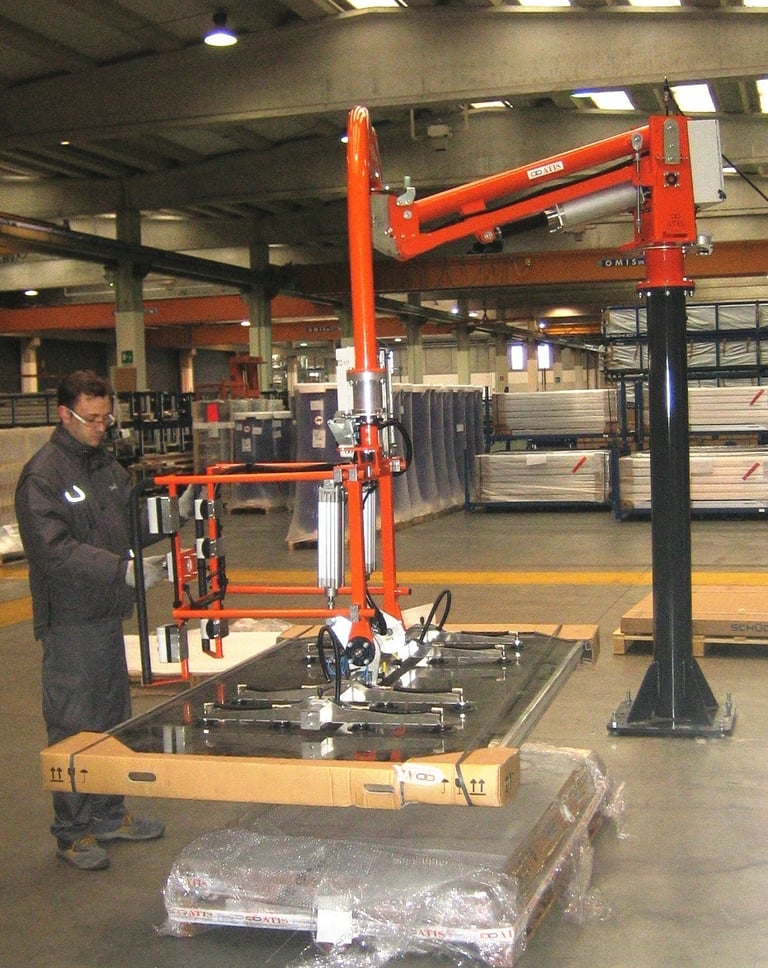
If you want help evaluating where training ends and when is it time to seek mechanical assistance, reach out—we’re always happy to talk through real-world scenarios from the floor up.

With a limitless number of configurations available, we can offer a Manipulator that does exactly what you need it to.