When Manual Handling Becomes a Bottleneck: Workflow Solutions
Heavy lifts, awkward parts, and repetitive tasks can create hidden workflow bottlenecks. This article explores practical strategies to keep your shop floor running smoothly.
by Grant Jedlinsky
1/21/20263 min read
Manual Handling Often Leads to Bottlenecks
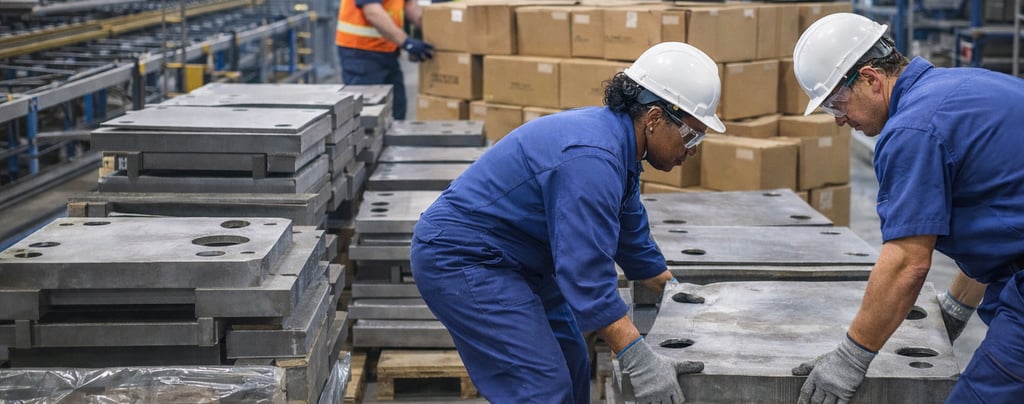
In manufacturing, assembly, and industrial operations, even small inefficiencies can ripple across a workflow. Manual handling—lifting, moving, or positioning parts by hand—is often a hidden source of bottlenecks. Repetitive tasks, awkward components, and heavy parts slow production, strain operators, and introduce errors.
Understanding when manual handling is limiting your workflow and exploring practical solutions can save time, reduce injuries, and increase consistency.
Recognizing Manual Handling Bottlenecks
Manual handling becomes a bottleneck when it limits throughput, increases fatigue, or leads to errors.
Key signs include:
Operators waiting for others to finish lifting or positioning parts
Fatigue affecting speed or accuracy
Parts frequently being damaged or misaligned
Tasks taking longer than expected or inconsistent cycle times
For example: if two operators spend 15 minutes lifting and aligning a 50 lb component for assembly while other stations sit idle, this task slows the entire line.
Why Bottlenecks Happen
Several factors contribute to manual handling bottlenecks:
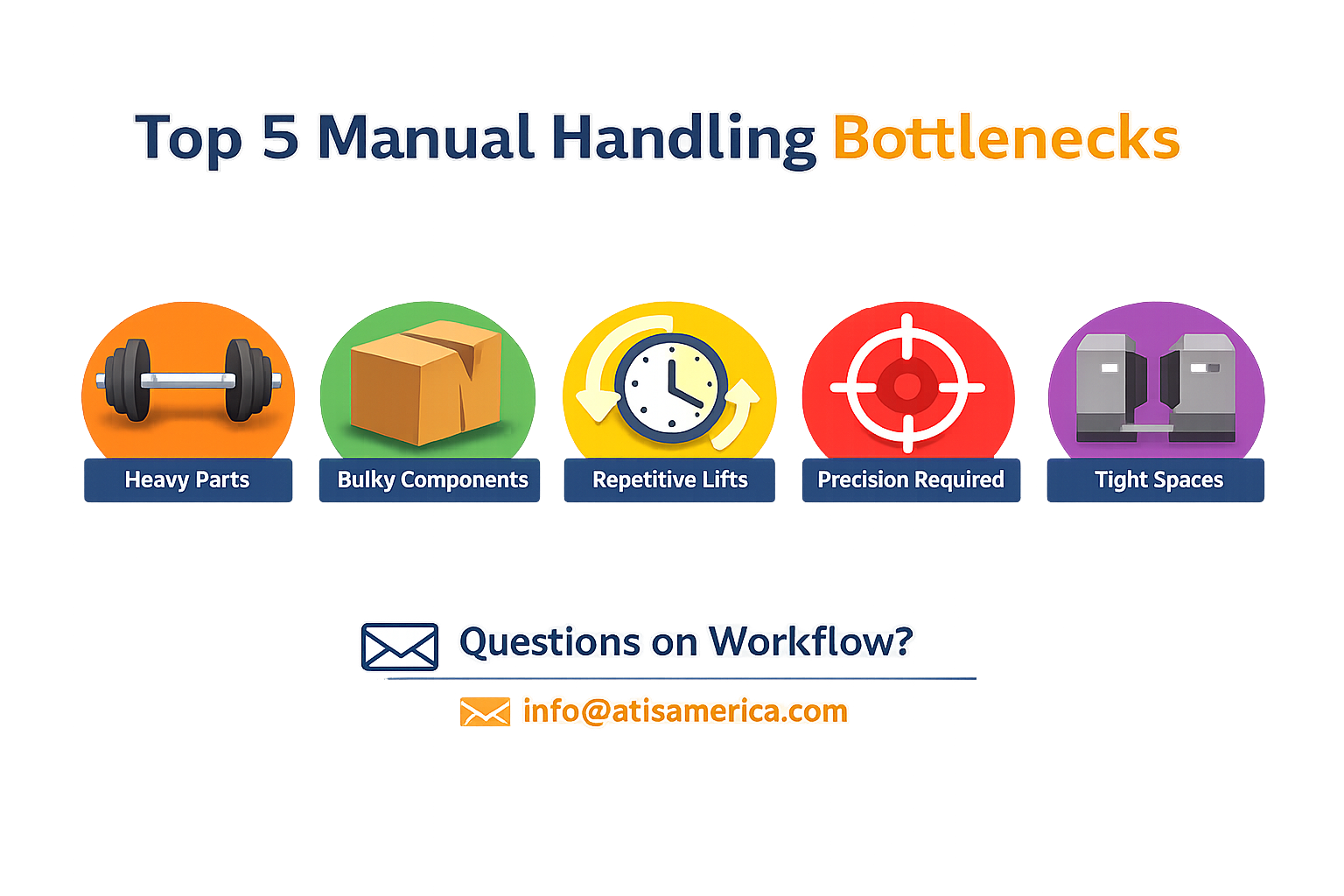
Heavy or Repetitive Loads
Tasks that require lifting the same heavy part multiple times per hour can fatigue workers quickly.Awkward or Bulky Components
Even light parts can be difficult to handle if they are wide, long, or irregularly shaped.Precision Requirements
Parts that must be aligned to tight tolerances require more attention, slowing down the workflow if handled manually.Limited Workspace
Cramped workstations make lifting and positioning difficult, leading to slower movement and increased errors.
Practical Workflow Solutions
Addressing manual handling bottlenecks doesn’t always mean expensive equipment. There are multiple strategies for improving efficiency, safety, and accuracy.
1. Reevaluate Task Flow
Sometimes the workflow itself is the bottleneck.
For example: if parts are being lifted from a storage area across the shop to the assembly line, moving storage closer or staging components along the path can reduce travel time.
2. Introduce Mechanical Assistance
Mechanical assists like pneumatic manipulators, hoists, or articulating arms can reduce strain while speeding up the workflow.
For example: if a team spends minutes aligning a heavy panel for CNC processing, a manipulator allows a single operator to position it smoothly, freeing teammates for other tasks.
3. Optimize Ergonomics
Small ergonomic adjustments can make repetitive tasks faster and safer.
For example: raising the work surface to waist height, adding lift-assist tools, or providing positioning guides can prevent bending, twisting, and reaching that slow operators down.
4. Cross-Train Operators
Rotating staff through tasks can reduce fatigue and maintain efficiency.
For example: if one operator lifts heavy parts all day, swapping tasks with an assembly-focused operator every few hours can prevent bottlenecks caused by tired workers.
5. Implement Standardized Handling Procedures
Consistency reduces errors and speeds up repetitive processes.
For example: labeling lift points, using jigs, or creating standard sequences for multi-part assembly reduces delays and ensures quality across operators.
Measuring Improvement
To ensure workflow solutions are effective, track metrics such as:
Cycle times before and after workflow changes
Number of errors, scrapped parts, or rework instances
Operator fatigue and injury reports
Overall production output
Even small gains per task add up to significant improvements across the operation.
The Right Tools for the Job
Manual handling isn’t inherently bad—but unaddressed, it can quietly slow your operation, increase fatigue, and introduce errors. By analyzing workflow bottlenecks and implementing solutions—mechanical assists, ergonomic adjustments, or task redesign—you can improve efficiency, safety, and consistency.
For example: tasks that once required two operators can sometimes be managed by one with the right tools, freeing staff for higher-value work and reducing bottlenecks across the line.
If you’d like guidance on evaluating your workflow and identifying opportunities to reduce manual handling bottlenecks, email us at info@atisamerica.com