When Do Parts and Processes Call for a Pneumatic Manipulator?
If your team handles heavy, awkward, or delicate parts, a pneumatic manipulator could transform safety, precision, and productivity. Learn how.
by Grant Jedlinsky
1/14/20263 min read
If Your Team Handles These Parts, You Probably Need a Pneumatic Manipulator
Some operations don’t think they need a manipulator—until injuries increase, quality slips, or productivity stalls. The reality is this: pneumatic manipulators aren’t just for extreme loads or exotic applications. They’re for everyday tasks that quietly strain workers, slow production, and introduce risk.
If your team regularly handles any of the parts described below, a pneumatic manipulator isn’t a “nice to have.” It’s a practical upgrade that improves safety, precision, and efficiency—often immediately.
So, Who Actually Needs a Pneumatic Manipulator?
In simple terms: Any operation that lifts, positions, rotates, or aligns parts that are heavy, awkward, repetitive, or delicate is a strong candidate for a manipulator. Let’s break that down into real-world scenarios.
1. Heavy Parts That Are Still Lifted by Hand
If your operators handle parts that are:
Heavy, but just light enough to lift manually
Lifted multiple times per shift
Moved between workstations or machines
You’re already operating in a high-risk zone. Manual lifting doesn’t fail all at once—it fails over time. Fatigue sets in. Form slips. Minor strains become recordable injuries. Pneumatic manipulators remove the weight from the equation entirely, allowing operators to guide parts effortlessly instead of muscling them into place.
Key signal you need a manipulator:
If heavy lifting is still done manually because “that’s how we’ve always done it.”
2. Large or Awkward Components That Are Hard to Control
Some parts aren’t especially heavy—but they’re bulky, unbalanced, or difficult to grip. Think:
Large panels
Doors, frames, windows or housings
Irregularly shaped components
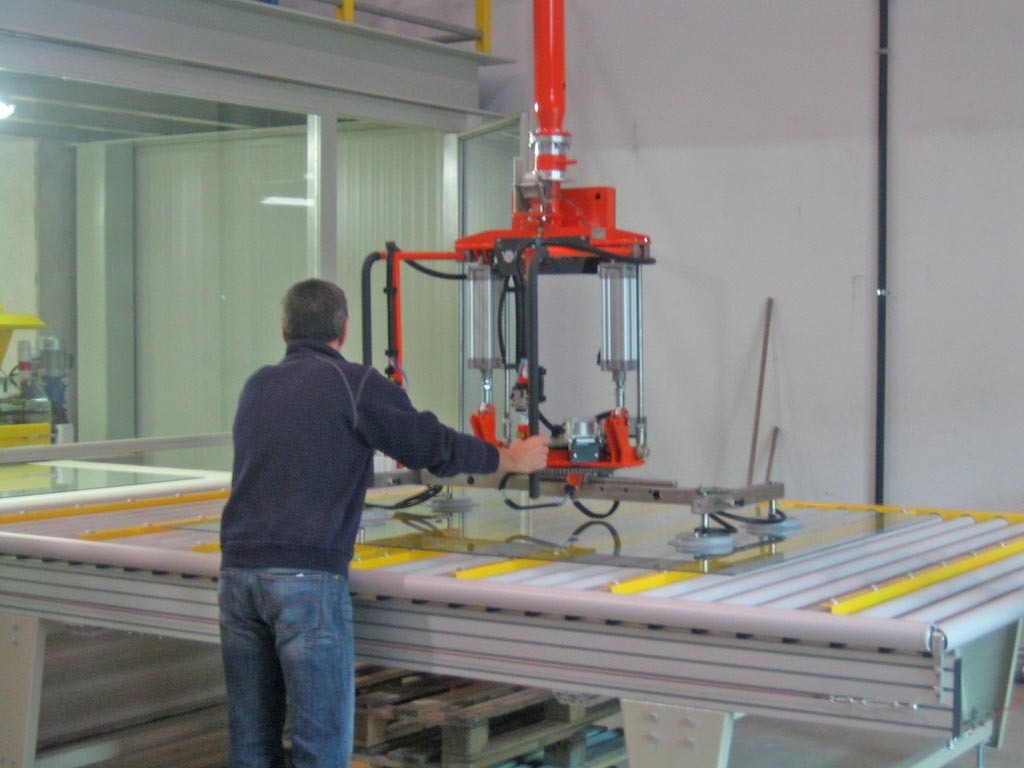
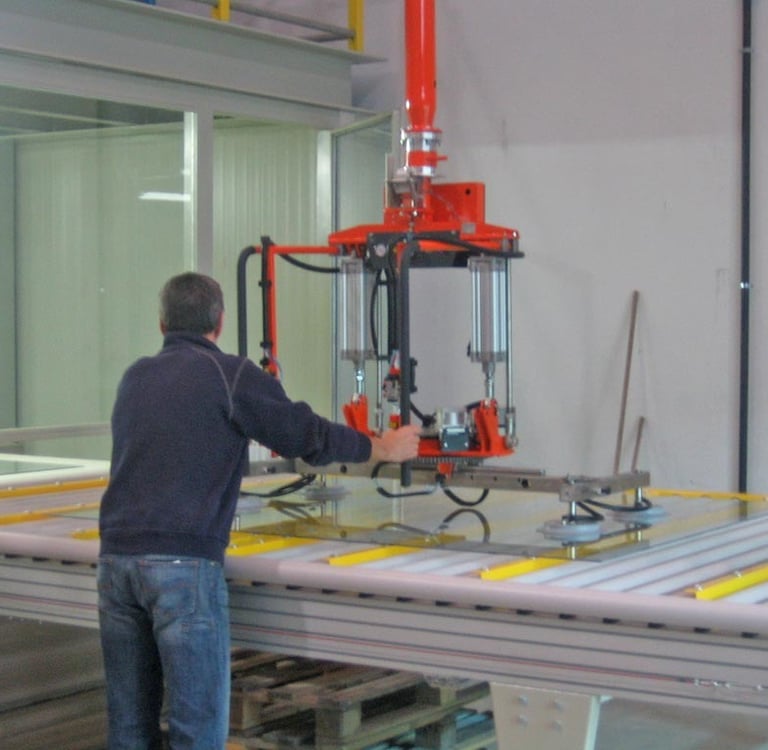
These parts are hard to control manually, especially when precision matters. Even small misalignments can lead to rework, damage, or safety incidents. A pneumatic manipulator provides controlled movement in multiple axes, allowing operators to position large parts smoothly and accurately—without fighting gravity or momentum.
Key signal you need a manipulator:
If parts are often “wrestled” into position instead of placed.
3. Delicate or High-Value Parts Where Damage Is Costly
Not all risks are physical. Some are financial. If your operation handles parts that are:
Finished, painted, or coated
Made of glass, composites, or thin materials
Expensive or difficult to replace
Manual handling introduces unnecessary variability. One slip, one bump, or one rushed movement can mean scrapped parts and lost time. Pneumatic manipulators offer smooth, responsive control that reduces sudden movements and operator fatigue—helping protect both the product and the process. Plus, ATIS engineers have already designed a huge variety of gripping attachments specifically made for delicate parts.
Key signal you need a manipulator:
If quality issues or part damage are blamed on “handling.”
4. Parts That Must Be Precisely Positioned or Aligned
Some tasks demand more than lifting—they require accuracy:
Loading parts into CNC machines
Aligning components for fastening or assembly
Positioning parts within tight tolerances
Even experienced operators struggle to maintain consistent precision when handling weight manually. Pneumatic manipulators give operators the ability to float parts into place, rotate them precisely, and hold position without strain.
Key signal you need a manipulator:
If precision relies heavily on operator strength and endurance.
5. Repetitive Tasks That Wear Down Your Best Operators
Repetition is one of the most overlooked reasons to invest in a manipulator. If a task is performed:
Dozens or hundreds of times per shift
By the same operators every day
With noticeable fatigue by the end of the day
You’re not just risking injuries—you’re risking turnover, absenteeism, and inconsistent performance. A pneumatic manipulator reduces physical effort while keeping operators fully in control, allowing skilled workers to focus on accuracy and efficiency instead of endurance.
Key signal you need a manipulator:
If fatigue—not skill—is the limiting factor in performance.
6. When Hoists and Cranes Aren’t the Right Answer
Traditional lifting devices solve only part of the problem. Hoists and cranes lift vertically—but they often lack the control needed for precise, ergonomic handling. Pneumatic manipulators bridge the gap by offering:
Smooth, intuitive movement
Multi-directional control
Ergonomic operation without complex controls
They’re ideal when parts need to be handled, not just lifted.
Key signal you need a manipulator:
If hoists feel clumsy, slow, or imprecise for the task.
The Real Question Isn’t “Do We Need One?”
It’s: How much is manual handling already costing you?
Lost productivity, injuries, quality issues, and operator fatigue often go unnoticed—until they add up. Pneumatic manipulators address these problems at the source by removing physical strain while improving control and consistency. If your team handles heavy, awkward, delicate, or repetitive parts, chances are a manipulator could dramatically improve your operation.
Not Sure Where You Fit? Let’s Talk.
You don’t need a finished plan—or even a specific model in mind. A simple conversation can quickly determine whether a pneumatic manipulator makes sense for your application. If you recognize your operation in any of the scenarios above, it may be time to explore a better way to handle your parts.
Contact us today and let’s find out if a manipulator is the right solution for your team.
info@atisamerica.com

Check out some of our most popular Gripping Systems: