
How to Lift Large Glass Panels Safely in Manufacturing
Learn how to lift large glass panels safely in manufacturing. Explore ergonomic handling methods, vacuum suction systems, and manipulators used for windshields and windows.
Matt Seibert, Director of Engineering
3/11/20264 min read
How to Lift Large Glass Panels Safely in Manufacturing
Handling large glass panels is a common challenge in industries ranging from automotive assembly to architectural window manufacturing. While many glass components are not extremely heavy, their size, fragility, and awkward handling geometry create serious risks for operators and products.
Without proper handling methods, lifting glass panels can lead to:
operator injuries from repetitive lifting
broken or scratched glass
slower production cycles
inconsistent installation accuracy
Modern manufacturing facilities increasingly rely on industrial manipulators with vacuum gripping systems to safely handle glass panels with precision and control.
Companies like ATIS America specialize in pneumatic manipulator solutions designed to improve safety and productivity in demanding industrial environments.
This guide explains the challenges of lifting glass panels and the safest ways manufacturers handle them today.
Why Large Glass Panels Are Difficult to Handle
Glass panels present a unique combination of challenges compared to many other industrial components.
Size and Bulk
Glass panels and windshields often have large surface areas that make them difficult to grasp and stabilize manually.
Even when the weight is manageable, the size and leverage of the panel increase the physical strain on operators.
Fragility
Glass must be handled delicately to prevent:
cracks
edge damage
scratches
product rejection
Even small impacts or vibrations during lifting can damage the material.
Awkward Gripping Surfaces
Unlike many components, glass typically offers very limited gripping points. The smooth surface makes manual lifting unstable and increases the risk of dropping the panel.
Repetitive Handling
Manufacturing environments often require glass panels to be lifted repeatedly during production and assembly processes. Repetition significantly increases the risk of musculoskeletal injuries.
Common Risks When Lifting Glass Panels Manually
Manual handling of glass panels introduces several risks to both workers and products.
Musculoskeletal Injuries
Repeated lifting or awkward movements can lead to:
back strain
shoulder injuries
fatigue
long-term musculoskeletal disorders
Repetitive lifting is a known cause of workplace injuries in manufacturing environments.
Product Damage
Glass is highly sensitive to impacts and misalignment. Inaccurate handling can result in:
cracked panels
chipped edges
cosmetic defects
Slower Production
Manual lifting also slows production processes. Large panels often require two operators to handle safely, which increases labor costs and reduces workflow efficiency.
In many facilities, manual handling becomes a bottleneck in the production line.
Typical Glass Handling Applications in Manufacturing
Large glass panels are used in a wide range of industries.
Automotive Glass
Manufacturers frequently handle:
automotive windows
windshields
rear glass panels
These components must be positioned precisely during assembly.
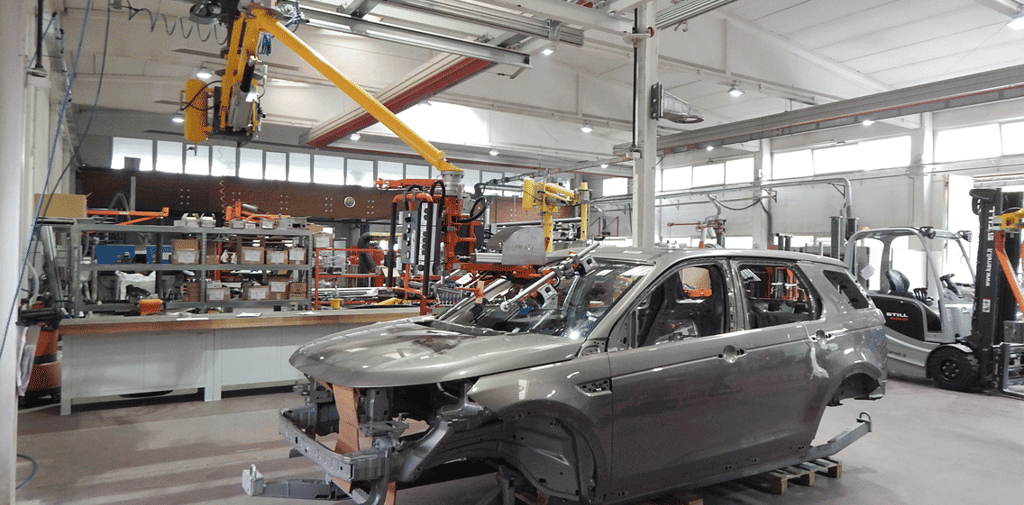
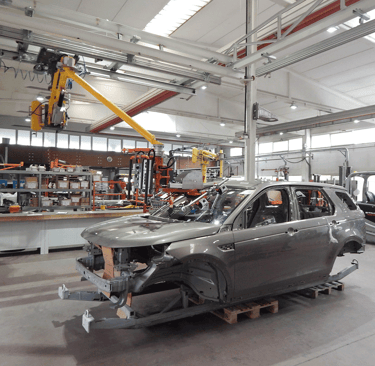
Examples of these applications can be seen in automotive production environments where manipulators assist operators with safely positioning windows and windshields.
Modern Glass Handling Solutions
Several technologies are used in manufacturing to handle glass panels safely.
Manual Handling
Manual lifting may be acceptable for small glass components, but it quickly becomes unsafe as panel size increases. Most manufacturing facilities move away from manual handling once panels become large or repetitive lifting is required.
Overhead Hoists with Suction Cups
Some facilities use simple suction cups attached to cranes or hoists. While this method allows glass to be lifted, it often limits operator control and precision. Operators must guide the load carefully to avoid swinging or impacts.
Pneumatic Manipulators with Vacuum Gripping Systems
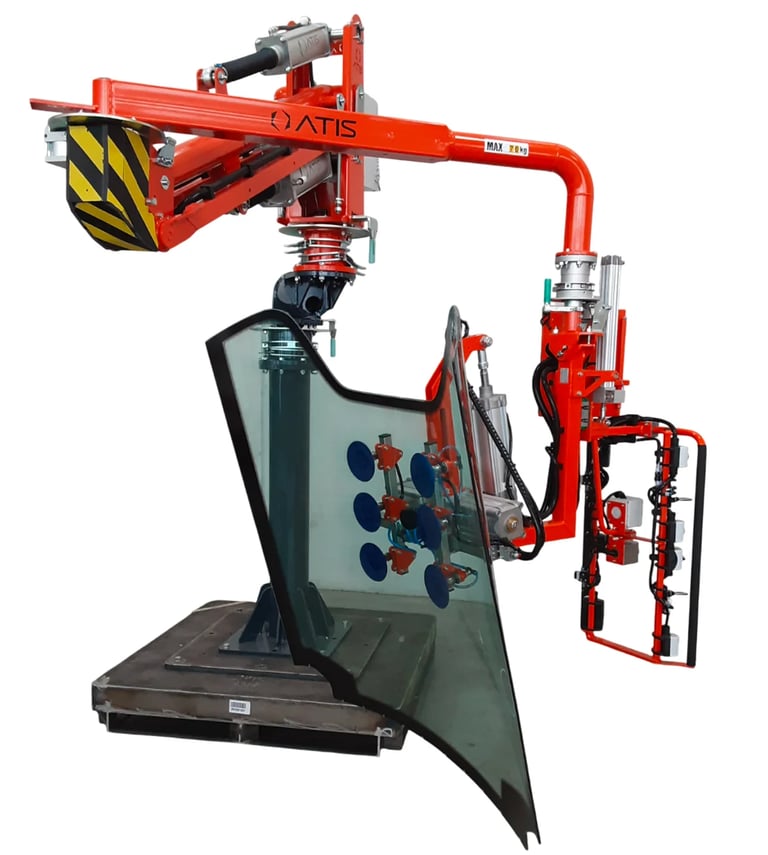
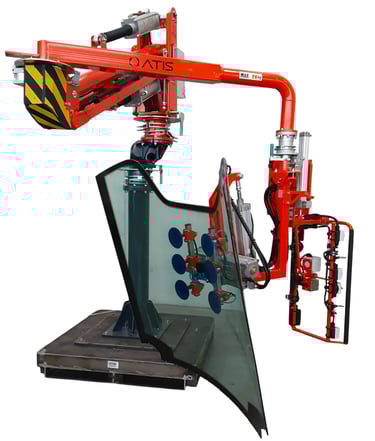
One of the most effective solutions for glass handling is a pneumatic manipulator equipped with suction cup gripping technology.
These systems combine:
a mechanical arm
vacuum suction cups
a control interface for the operator
The suction cups attach to the glass surface using vacuum pressure, creating a stable and secure grip.
The manipulator arm then allows the operator to move the glass smoothly and precisely.
You can explore examples of these systems on the ATIS demo gallery:
See real manipulator applications in action
Precision Placement for Glass Installation
In many manufacturing processes, glass panels must be positioned with extremely high accuracy.
Examples include:
installing glass into window frames
positioning automotive windshields
placing glass panels during assembly operations
Industrial manipulators allow operators to move glass panels with controlled precision while maintaining ergonomic working conditions.
The range of pneumatic manipulators available today allows manufacturers to match the equipment to the load size, work envelope, and application requirements.
Explore the full range of ATIS pneumatic manipulators
Improving Safety and Productivity
Using manipulators for glass handling can significantly improve both safety and production efficiency.
Manufacturers report several operational benefits:
reduced physical strain for operators
faster assembly processes
lower risk of glass damage
improved installation accuracy
In some cases, manipulators allow a single operator to perform tasks that previously required two workers, improving labor efficiency and productivity.
Industrial manipulators are designed specifically to reduce physical strain while maintaining full operator control of the load.
Learn more about pneumatic manipulator solutions
Custom Handling Solutions for Glass Panels
Glass panels vary widely in size, shape, and handling requirements.
For this reason, industrial manipulators are often designed with custom gripping systems tailored to the product being handled.
Suction cup frames can be configured in multiple layouts to match the geometry of the glass panel. These systems can also be adapted to handle curved glass or irregular shapes.
Industrial manipulators are available in multiple configurations to accommodate different production environments, including rigid-arm and pneumatic systems designed for ergonomic load handling.

Architectural Glass
Glass panels are commonly handled during the production and assembly of:
window frames
building panels
glass doors
Handling and installing glass into window frames requires careful positioning to avoid damaging the frame or the glass.

Specialty Glass Products
Other industries handle glass panels used in:
appliances
solar modules
furniture
industrial equipment
These products often require controlled positioning and delicate handling.

FAQ: Glass Handling in Manufacturing
What is the safest way to lift large glass panels?
The safest method is typically using a vacuum manipulator with suction cups, which provides a secure grip while eliminating the physical strain of lifting the glass manually.
Why are suction cups used for glass handling?
Glass has a smooth surface that allows suction cups to create a strong vacuum seal, providing a stable grip without damaging the material.
Can one person lift large glass panels safely?
With the help of industrial manipulators, a single operator can often handle large glass panels safely because the equipment supports the weight and allows precise control of the load.
Why is precision important when handling glass?
Glass panels must often be installed into frames or assemblies with high accuracy. Controlled movements reduce the risk of cracking the glass or damaging surrounding components.
Conclusion
Handling large glass panels safely requires more than simply lifting the material. Manufacturers must consider operator safety, product integrity, and production efficiency.
Industrial manipulators equipped with vacuum gripping systems provide a reliable solution by supporting the weight of the glass and allowing operators to move panels smoothly and precisely.
By combining ergonomic handling with precise control, these systems help manufacturers reduce injuries, prevent product damage, and maintain efficient production workflows.
Technical questions? Ask our engineer: